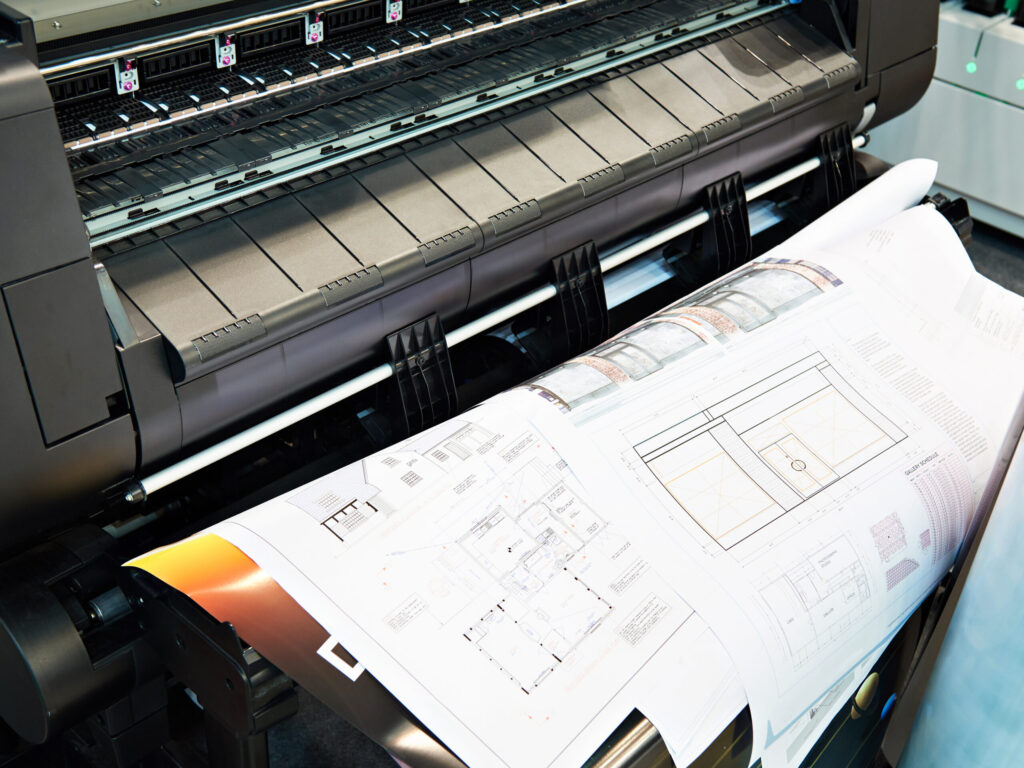
Choosing the right plotter paper might seem straightforward, but making the wrong choice can lead to poor print quality, wasted money, and frustrated teams. At RK Reprographics, we help construction professionals choose plotter paper that matches their specific project requirements.
Industry standards for construction documentation are maintained by organizations like the American Institute of Architects.
Step 1: Define Your Primary Use Case to Choose Plotter Paper
Before comparing paper specs, clarify what you need the prints for. Are they going to jobsites where they’ll get wet? Staying in climate-controlled offices? Being archived for decades?
Jobsite Plans – Require durable, water-resistant options; coated paper typically makes sense
Office Reference Copies – Standard bond paper provides excellent value and readability
Permanent Records – Premium vellum or archival paper preserves documents for 50+ years
Presentation Rolls – Matte or semi-gloss coated papers photograph and display well
Most construction firms actually need different paper types for different purposes. We typically recommend firms keep a mix on hand.
Step 2: Consider Durability Requirements
Durability exists on a spectrum. A blueprint referenced once in an office needs far less durability than one handled by electricians, plumbers, and general contractors working outdoors for months.
Light Duty (office use) – Standard 80 gsm bond; expect 6-12 months of reference life
Medium Duty (some jobsite use) – Heavier bond or light coating; expect 12-24 months
Heavy Duty (outdoor, multi-trade) – Polyester-coated or synthetic; expect 2+ years
Step 3: Evaluate Your Budget Constraints
Paper costs vary significantly. Standard bond is the most economical media option per square foot. Coated papers can run significantly higher per square foot. Over a large project, this adds up quickly.
However, cheaper paper sometimes costs more in the long run. Poor-quality prints that get damaged and need reprinting represent hidden costs.
Step 4: Account for Environmental Factors When You Choose Plotter Paper
The physical environment where prints will live dramatically affects which paper makes sense. Humidity, temperature, and light exposure all matter.
Moisture-Heavy Environments – Polyester-coated papers are essential
Long-Term Storage – Premium vellum or archival papers resist yellowing
High-Traffic Jobsites – Coated papers resist fingerprints and smudging
Outdoor Installations – Synthetic papers maintain integrity in sun exposure
Step 5: Test Before Committing to Large Orders
We always recommend ordering sample prints on different paper types before committing to a large project. Have your team handle the samples, mark them up, and expose them to real-world conditions for a week or two.
Step 6: Consider Your Printer Capabilities
Not all papers work with all printers. Inkjet printers handle coated papers better than laser printers. Some specialty papers require specific conditions to feed properly.
If you’re using a printing service like RK Reprographics, we handle these technical considerations for you.
Common Mistakes When You Choose Plotter Paper
Choosing cheapest paper without considering durability or failure costs often backfires. Standardizing one paper type when different uses require different substrates causes problems. Ignoring storage conditions degrades even premium papers.
Frequently Asked Questions
What paper do you recommend for blueprints? For jobsite use: coated bond or lightweight polyester coating. For office archives: premium vellum.
Is glossy or matte better? Glossy shows detail better but glares and shows fingerprints. Matte is easier on eyes but slightly less contrast. Test both.
How much should I budget for paper? For standard projects: 3-5% of total printing costs. For jobsite-intensive projects: up to 10%.
Comprehensive Service Comparison and Analysis
Understanding how reprographic services compare to alternatives is essential for making informed decisions. Hybrid approaches combining some digital workflows with strategic printing often optimize cost and efficiency.
When evaluating whether traditional printing, digital document management, or hybrid approaches best serve your needs, consider your current workflows. Do team members need paper documents at job sites where digital access isn’t reliable?
Quality Assurance and Standards
Professional reprographic services maintain quality assurance processes ensuring consistent, excellent output. Regular calibration, trained operators, and systematic quality checks prevent issues before they reach clients.
When choosing a printing partner, ask about their quality assurance procedures. Vendors with documented processes deliver more reliable results than those relying solely on operator judgment.
Long-Term Value of Choosing the Right Plotter Paper
Choosing the right plotter paper is an investment in project success. At RK Reprographics, we work with you to understand your needs and recommend the ideal substrate for every application. Reach out today for a free consultation on the best paper choices for your construction documents.
For more information about construction document services, visit our complete guide to reprographics.