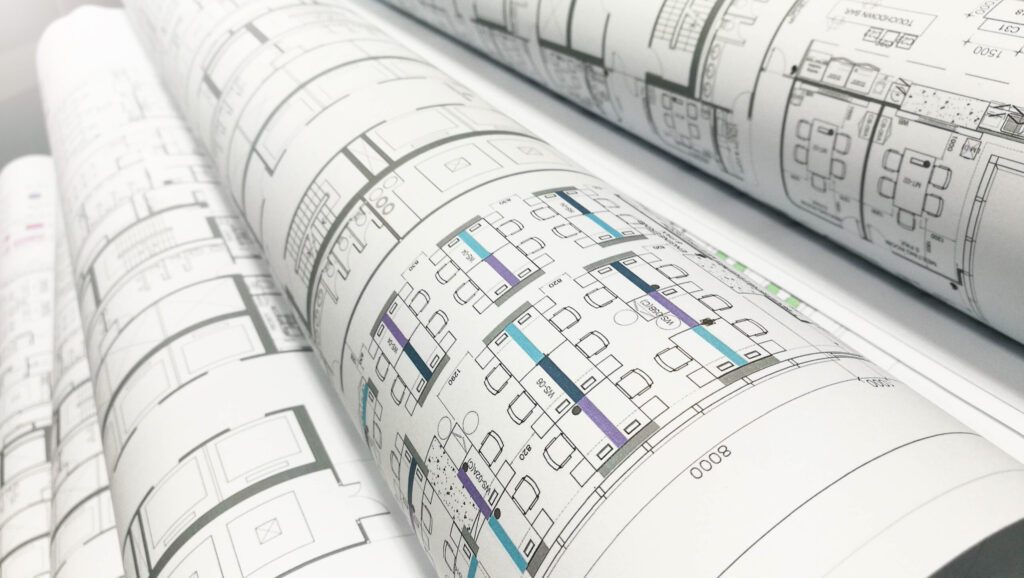
Blueprint printing civil engineers: Our blueprint printing civil engineers service delivers expert results.

Civil engineering drawings present unique printing challenges. Site plans span large areas at small scales, cross-sections can run many feet long on continuous sheets, and utility layouts require precise registration between disciplines. Getting these documents printed correctly is essential for accurate earthwork, grading, and infrastructure installation.
At RK Reprographics, we produce civil engineering sets for site development, transportation, utility, and municipal projects. Our experience with oversize sheets, non-standard scales, and roll-fed continuous printing makes us well-suited to handle the unique demands of civil work.
Site Plan Printing at Scale
Civil site plans are often drawn at scales like 1″ = 20′, 1″ = 50′, or 1″ = 100′, and they need to print at exact scale for field use. Survey crews and grading contractors rely on being able to pull accurate measurements directly from the paper. We verify scale on every civil set and adjust print settings if needed to maintain dimensional accuracy.
Oversize and Continuous Sheets
Cross-sections, road profiles, and utility plans often exceed standard sheet sizes. We print on continuous rolls up to 36″ wide and virtually any length, so your 20-foot-long profile sheet prints as a single, seamless document. We can also fold or roll these oversize prints for easy transport to the field.
Media for Civil Engineering Prints
20 lb Bond – Cost-effective for office review and plan room distribution.
Mylar – Essential for field sets used by survey crews and grading contractors who work in all weather conditions.
Tyvek – Synthetic paper that resists tearing and water. A practical alternative to Mylar for field use at a lower cost.
Utility Plans and Coordination
Civil utility plans — sanitary sewer, storm drainage, water, gas, and electric — must coordinate precisely with each other and with the site grading plan. We can print individual discipline sheets or combined utility plans for coordination review, and we produce overlay sets on vellum when engineers need to check alignment between systems.
Government and Municipal Submittals
Civil engineering projects frequently require plan submittals to DOTs, municipalities, and environmental agencies. These submittals often have specific requirements for sheet size, media, fold style, and number of copies. We are experienced with municipal submittal requirements and can produce sets that meet your jurisdiction’s specifications.
Frequently Asked Questions
More blueprint printing civil engineers content.
Can you print DOT-standard plan sheets?
Yes. We routinely produce plan sets that meet state DOT standards for sheet size, title block placement, and print quality.
How do you handle very long cross-section sheets?
We print continuous sheets on roll media with no length limit. Cross-section sheets can be delivered rolled, folded to a standard size, or fan-folded for easy reference.
Do you print civil plan sets for municipal plan room distribution?
Absolutely. We produce the required number of sets at the specified size and fold, and we can deliver directly to the plan room or municipal office.
Understanding Your Trade’s Specific Drawing Needs
Every trade in construction has unique requirements from the drawings they use. What works for one group may not serve another equally well. Understanding these nuances helps create drawing packages that truly support your field work.
When you’re ordering prints, think about your team’s actual workflow. What size drawings work best for your type of installation? What level of detail matters most? Do you need the full building set or just your discipline’s portion? Communicating these preferences to your print provider ensures you receive sets optimized for your work.
Coordination with Other Trades
Successful construction requires coordination among multiple trades. Your work intersects with other systems — HVAC routing affects framing, electrical runs follow structural elements, plumbing must coordinate with mechanical systems.
Having complete or near-complete drawing sets helps you understand how your work fits within the broader project context. This reduces installation errors and coordination conflicts. We can help you select appropriate drawing packages that include context information beyond just your specific trade work.
Customized Drawing Packages
Rather than standard full sets, many contractors benefit from customized packages that include relevant information while minimizing unneeded details. For example, roofers might want roof plans, details, and notes, but full floor plans may be unnecessary.
We can customize drawing packages based on your trade and scope. This focused approach keeps drawing sets manageable while ensuring you have the information you need. Discuss your specific requirements when placing orders.
Scales and Readable Details
Construction drawings use various scales. Large-scale details (1/2″ or larger) are critical for showing connection and installation specifics. Smaller-scale plans (1/8″ or 1/4″) show overall building layout and coordination.
If you find yourself squinting at prints trying to read critical details, that’s a sign your drawing set may benefit from enlarged detail sheets or reprinting at larger scales. Custom reordering at different scales can improve usability significantly.
Long-Term Documentation
As-built documentation — marked-up prints showing actual conditions versus design — becomes valuable long-term reference for facility maintenance and future modifications. Establishing good record-keeping practices during construction creates organizational assets.
We can help you print as-built sets formatted for markup and recordkeeping. These become part of your firm’s project history and reference material for future similar work.
Building Stronger Relationships
Construction relationships are built on mutual respect and clear communication. When you work with a print provider who understands your trade’s specific needs and consistently delivers what you need, that partnership improves your work.
We appreciate input from trades about how we can better serve your needs. If something isn’t working about the drawing sets you receive, let us know. We’re committed to supporting your success.
Drawing Organization for Maximum Efficiency
Successful contractors have learned that well-organized drawing packages save time and prevent costly errors. This isn’t just about printing — it’s about how drawings are organized, labeled, and delivered to support your team’s workflow.
When you’re ordering drawing sets, communicate your preferred organization. Do you want sheets organized by building area, by system type, or in a specific sequence? Do you need separate sets for different crews or locations? These preferences affect how we print and organize your sets.
Markup and Documentation Practices
Field teams mark up prints as work progresses. These marked prints document actual conditions, changes, and decisions. Over time, marked prints become invaluable references showing why certain changes were made or how existing conditions differ from design.
Establishing good markup practices during the project creates documentation value extending years beyond project completion. Encourage your teams to mark clearly, identify the marker and date, and preserve these marked sets as project records.
Quantity Planning and Just-In-Time Printing
Printing too many sets wastes money and storage space. Printing too few creates delays and scrambling. Experienced contractors plan quantities carefully, recognizing that sets will be lost, damaged, or rendered obsolete by revisions.
A typical rule of thumb is to print one set per crew plus 20% for extras. On multi-phase projects with significant downtime between phases, plan separate print runs. We can help you determine appropriate quantities based on your project structure.
Managing Drawing Revisions
Most projects involve multiple drawing revisions as design develops or construction reveals unexpected conditions. Managing revisions efficiently prevents field confusion. Clear protocols — revision numbers, revision dates, distribution lists — help ensure everyone has current information.
When revisions occur, don’t mix old and new versions. Collect outdated prints and destroy them. Reprint sets with current revisions. This discipline prevents the costly situation where some crew members follow updated plans while others use outdated versions.
Coordination Between Design and Field
The design team creates drawings based on assumptions. The field work reveals reality. Managing the interface between design intent and field execution improves outcomes.
When field conditions differ from design, communicate clearly with the design team. If rework or modifications are needed, document the decision and basis. This communication flow prevents assumptions and misunderstandings that lead to later conflicts.
Long-Term Value of Quality Documentation
Contractors who maintain excellent project documentation build valuable organizational assets. Well-organized, clearly marked sets showing decisions and actual conditions become references for similar future projects. This institutional knowledge improves efficiency and quality on subsequent work.
We help you create documentation sets that support this long-term value. Archive-quality printing on durable media, organized systematically, provides reference material that serves your organization for years. See our large format printing or contact us. Resources at printing.org.