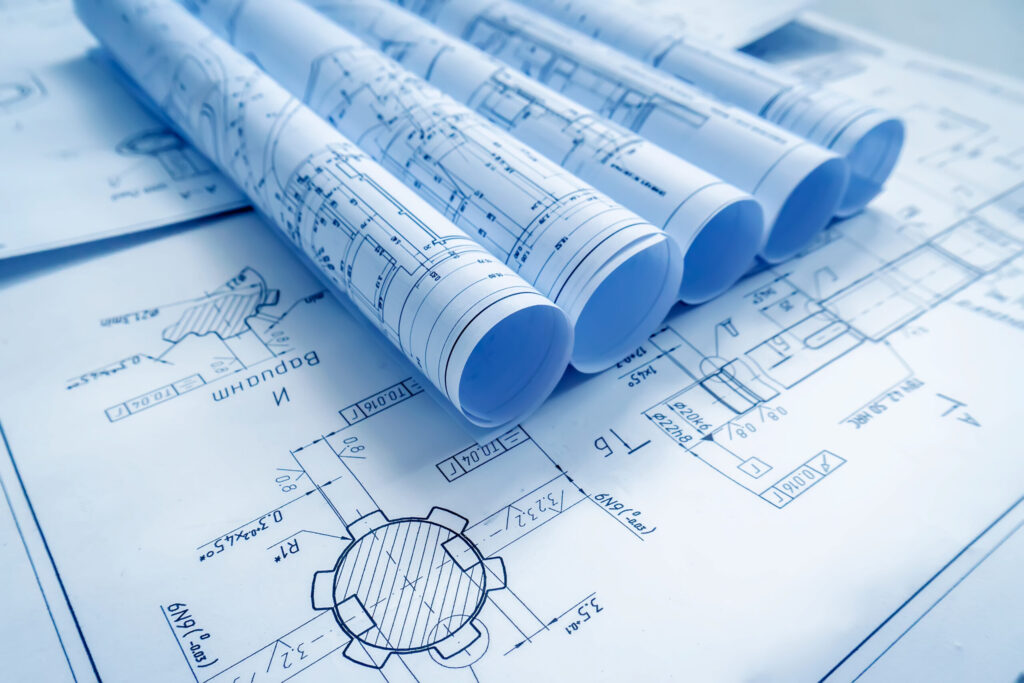
What is reprographics? At its core, reprographics refers to the reproduction of graphics, documents, and technical drawings through various mechanical or digital processes. While the term may sound unfamiliar to those outside the construction and architecture industries, reprographics plays a critical role in how buildings, bridges, and infrastructure projects move from design concepts to finished structures.
For decades, reprographics has been the backbone of construction document management. Every set of blueprints handed to a contractor, every permit submission delivered to a building department, and every as-built drawing archived after project completion passes through a reprographic process. Understanding what reprographics is and how it works gives construction professionals a clearer picture of why this industry continues to thrive even in an increasingly digital world.
What Is Reprographics? Breaking Down the Definition
The word reprographics combines “repro” (reproduction) with “graphics” (visual images or drawings). The American Institute of Reprographics defines it as the science and practice of reproducing documents, drawings, and visual materials through mechanical, photographic, or digital means. In practical terms, reprographics encompasses everything from large-format blueprint printing to document scanning, digital plan distribution, and archival reproduction.
The AutoCAD platform has become a standard tool in producing the digital drawings that feed into modern reprographic workflows.
Reprographics differs from standard commercial printing in several important ways. While a commercial printer focuses on marketing materials like brochures, business cards, and flyers, a reprographic service provider specializes in the accurate reproduction of technical documents at precise scales. A blueprint printed one-sixteenth of an inch off-scale could translate to feet of error on a construction site, making precision the defining characteristic of reprographic work.
What Does Reprographics Include?
Modern reprographics encompasses a range of services that support the construction, architecture, and engineering industries. These services have evolved significantly from the diazo printing methods of the past, but the core mission remains the same: producing accurate, readable copies of technical documents.
A Brief History of Reprographics
The origins of reprographics trace back to the mid-1800s when Sir John Herschel developed the cyanotype process, which produced white lines on a blue background. This is where the term “blueprint” originated, and the process remained the industry standard for over a century. By the 1940s, diazo printing (also called whiteprinting) began replacing cyanotypes, producing blue or black lines on a white background.
The 1980s and 1990s brought a seismic shift as xerographic (toner-based) and inkjet technologies entered the large-format market. These technologies allowed reprographic shops to produce prints faster, at higher resolution, and in full color. Today, digital reprographics combines high-speed wide-format plotters, large-format scanners, and cloud-based distribution platforms to deliver construction documents faster than ever before.
Why Reprographics Matters in Construction
Construction projects generate enormous volumes of documentation. A mid-size commercial building project can produce 500 to 2,000 individual drawing sheets, and every subcontractor, inspector, and building department needs accurate copies. Reprographics ensures that every stakeholder on a construction project works from identical, accurate, and up-to-date information.
The consequences of poor-quality reprographics are real and measurable. A study by the Construction Industry Institute found that rework caused by document errors accounts for approximately 5 to 10 percent of total project costs. When a plumber reads a dimension incorrectly because of a blurry or off-scale print, the cost compounds through material waste, labor delays, and change orders. Professional reprographic services eliminate this risk by maintaining strict quality control over every print run.
What Is Reprographics in the Digital Age?
The rise of Building Information Modeling (BIM), cloud-based plan rooms, and tablet-based field tools has led some to predict the end of printed construction documents. Yet the reality tells a different story. Printed blueprints remain essential on active job sites where dust, moisture, and sunlight make screens difficult to read, where multiple tradespeople need to reference the same drawing simultaneously, and where building departments still require physical submissions.
Modern reprographic companies have adapted by offering hybrid services that combine digital distribution with physical printing. A general contractor can upload a drawing set to an online plan room, invite subcontractors to download digital copies, and simultaneously order printed sets shipped directly to the job site. This flexibility makes today’s reprographic providers more valuable than ever to construction teams managing complex, multi-location projects.
Who Uses Reprographic Services?
Reprographic services serve a broad cross-section of the construction and design industries. Architects use reprographic shops to produce presentation-quality drawings for client meetings, permit submissions, and construction administration. General contractors rely on reprographics for bid set distribution, job-site document management, and as-built documentation. Subcontractors need accurately printed and scaled drawings for their specific trades, whether that involves electrical conduit routing, HVAC duct layouts, or structural steel connections.
Beyond construction, reprographic services support real estate developers producing site plans for zoning hearings, civil engineers printing survey and grading plans, and government agencies maintaining infrastructure documentation. Any industry that depends on large-format technical drawings benefits from professional reprographic services.
Choosing a Reprographic Service Provider
When selecting a reprographic partner, construction professionals should evaluate several key factors. Print quality and scale accuracy are non-negotiable since even minor distortions can cause costly errors in the field. Turnaround time matters on fast-track projects where drawings change weekly or even daily. Online ordering capabilities streamline the process for firms managing multiple projects across different locations. And nationwide shipping opens the door for remote teams working on projects far from the reprographic shop’s physical location.
The best reprographic providers combine state-of-the-art printing technology with deep construction industry knowledge. They understand the difference between a permit set and a bid set, they know which building departments require specific paper sizes or binding methods, and they can advise on the most cost-effective approach for projects ranging from a single-family home renovation to a multi-tower commercial development.
Frequently Asked Questions: What Is Reprographics?
Is reprographics the same as printing?
Not exactly. While reprographics involves printing, it specifically refers to the reproduction of technical documents, drawings, and graphics at precise scales. Standard printing focuses on marketing materials and general documents without the strict accuracy requirements of construction drawings.
Are blueprints still blue?
No. The term blueprint is a holdover from the cyanotype process used in the 1800s and early 1900s. Modern construction drawings are printed as black or color lines on white paper using inkjet or toner-based technology.
Do I still need printed blueprints if my team uses iPads?
In most cases, yes. Many building departments still require printed submissions, field conditions often make screens impractical, and multiple trades frequently need to reference the same drawing simultaneously. A hybrid approach combining digital and printed documents is the current industry standard.
How much does reprographic printing cost?
Costs vary based on paper size, color vs. black-and-white, paper type, and quantity. A standard black-and-white 24 x 36 inch blueprint is affordably priced per sheet, while color prints and specialty media cost more. Volume discounts are available for large projects.
Understanding what is reprographics helps construction professionals choose the right document reproduction methods for their projects. Whether you need large-format printing, digital scanning, or cloud-based distribution, knowing what is reprographics gives you the foundation to make informed decisions about your construction document workflow.
The Future of Reprographics
Reprographics continues to evolve alongside the construction industry. The integration of artificial intelligence for automated quality checking, augmented reality overlays that connect printed plans to 3D models, and sustainable printing practices using recycled materials and energy-efficient equipment are all shaping the next chapter of this essential industry. As long as buildings are designed, permitted, and built, reprographics will remain a fundamental part of the process.
For professional reprographic services tailored to your project needs, explore our full range of reprographics solutions.